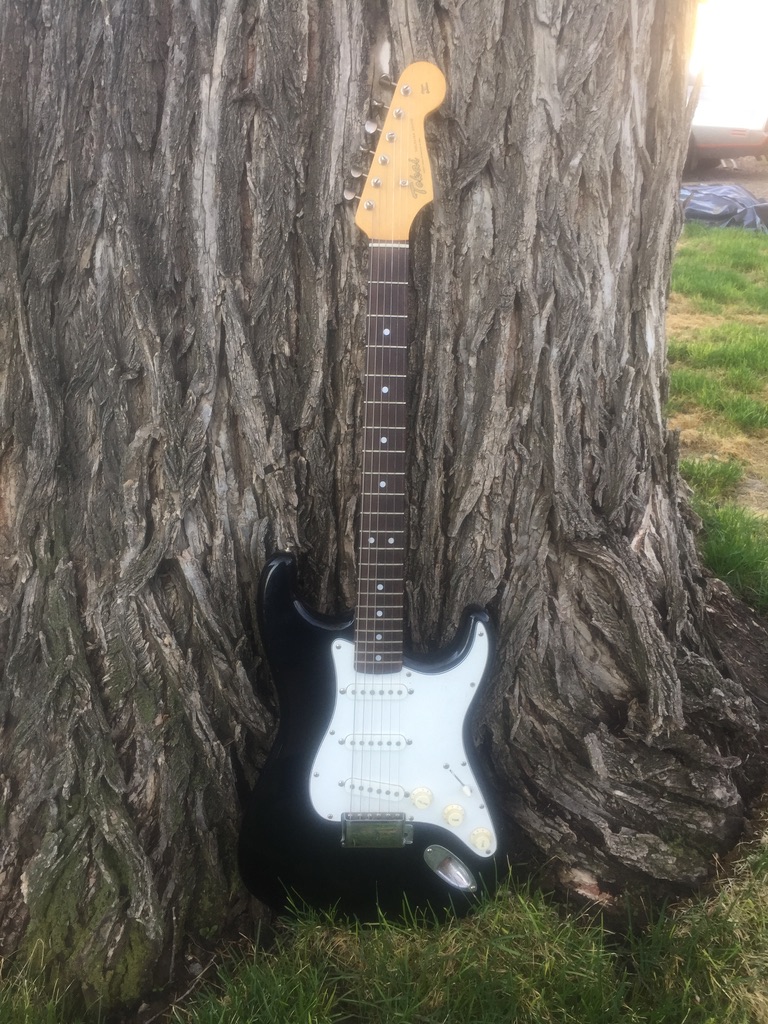
The Tokai Goldstar Sound is one of the most significant Japanese guitars of the early 1980s — and one of the most misunderstood. Introduced in late 1983 as a rebranding of the already-acclaimed Springy Sound series, the Goldstar represented Tokai at the height of their powers: building Stratocaster replicas so accurate that Fender took serious notice. The name change from Springy to Goldstar was cosmetic only — the underlying quality remained identical, and this era represents some of the finest production in Tokai's history.
Built at Tokai's factory in Hamamatsu, Japan — the same city where Yamaha and Kawai built their instruments — the Goldstar was constructed to exacting vintage specifications at a time when Fender's Fullerton factory had closed and American Strat production had all but halted. The Goldstar didn't just rival American Fenders of the period — it frequently surpassed them. UK music press famously described it as "the guitar that made Fender invent the Squier," and that reputation has only grown with time.
The TST model number reflected the original Japanese domestic price in thousands of Yen — a higher number indicating more refined finishing and premium components. Rosewood-board models used L-prefix serial numbers, a deliberate nod to Leo Fender's 1964-era instruments. These guitars are now highly collectible, particularly the 1983–1985 examples with their period-correct small headstocks and vintage-wound gray-back pickups.
This example — finished in black with a white 3-ply pickguard and rosewood fingerboard — is one of the most timeless Goldstar configurations. The combination gives it a lean, precise character that suits the guitar's personality perfectly: punchy, clear single-coil tone with build quality that holds up decades later without apology.